
A calmer evening does not need an elaborate routine. A few small, repeatable habits can help create a gentler transition between the demands of the day and the rest your body needs.
Estimated reading time: 6 minutes
Welcome to Life With Health!
Your Cart is Empty
Registration is free and easy!
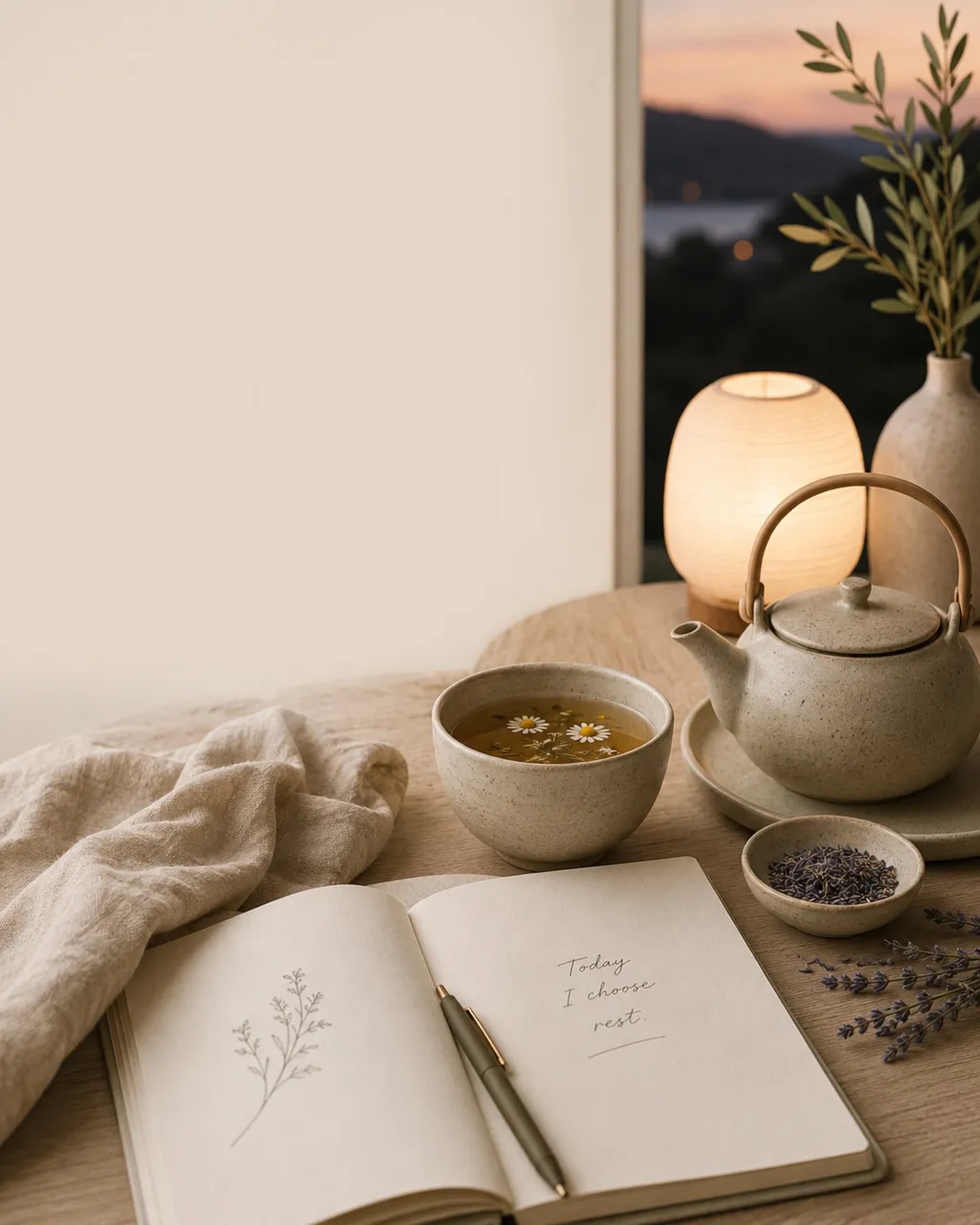
A calmer evening does not need an elaborate routine. A few small, repeatable habits can help create a gentler transition between the demands of the day and the rest your body needs.
Estimated reading time: 6 minutes
When the day ends, but your mind keeps going
The working day may be over, dinner may be finished and the lights may be dimmed—but sometimes the mind is still answering emails, replaying conversations or planning tomorrow.
Going directly from stimulation, responsibility and screen time into bed does not always give the body much opportunity to adjust.
An evening calm ritual creates a small space between doing and resting.
It is not a strict wellness schedule. It does not need to involve expensive products, a perfect home or an hour of meditation.
It is simply a familiar series of actions that tells your body:
The day is slowing down. Nothing more is required of me right now.
An evening ritual is a short, repeatable routine practised before bed.
It may include dimming the lights, putting away your phone, making a caffeine-free herbal tea, taking a warm shower, reading or writing down tomorrow’s tasks.
The individual activity matters less than the rhythm you create.
Health organisations including the CDC, NHS and the U.S. National Heart, Lung, and Blood Institute recommend maintaining a regular sleep schedule and using the period before bed for quieter, lower-stimulation activities.
A ritual cannot guarantee perfect sleep. But it can make the transition into rest feel calmer, more intentional and less abrupt.
Our bodies respond well to rhythm.
Going to bed and waking at reasonably consistent times can support the body’s natural sleep–wake cycle. The CDC and NHLBI recommend keeping regular sleep and wake times, including at weekends where possible.
This does not mean every evening must look identical.
Real life includes late dinners, family responsibilities, celebrations, travel and nights when nothing goes according to plan. A helpful ritual should be flexible enough to survive real life.
Instead of aiming for a perfect two-hour routine, create a simple version you can repeat most evenings—even when you only have 15 or 20 minutes.
Begin by choosing a time when the active part of your day starts to close.
This might be 30 minutes before bed, or slightly longer when your evening allows it.
At this time:
You do not need to feel instantly peaceful. The purpose is simply to stop adding more stimulation.
Try repeating the same small cue each evening, such as switching on a warm lamp, putting on comfortable clothes or preparing your favourite mug.
Over time, that cue can become your personal signal that the day is moving towards rest.
Phones are not the enemy, but they are very good at keeping the mind engaged.
A quick check can easily become another email, another news story or another half-hour of scrolling. Electronic devices also expose us to bright light at a time when a softer environment may be more suitable.
The CDC recommends turning off electronic devices at least 30 minutes before bedtime, while NHS guidance encourages creating screen-free time during the hour before bed.
Choose a boundary that feels realistic:
This is not about being perfectly disciplined. It is about protecting a small part of the evening from unnecessary demands.
Sometimes the body is tired, but the mind is still holding a long list of unfinished thoughts.
Rather than trying to solve everything in bed, write it down.
Keep a notebook nearby and spend two or three minutes recording:
Your list does not need to become deep journaling. Its purpose is to give your thoughts somewhere to rest outside your head.
Try ending with a simple sentence:
“This is enough for today.”
A quiet anchor is one gentle activity that brings your attention back to the present moment.
It could be:
You do not need to do all of them.
In fact, choosing one or two activities is often more sustainable than creating a long checklist that becomes another responsibility.
Preparing tea can work well as an evening anchor because the process naturally asks us to pause.
Boil the water. Measure the leaves. Notice the aroma. Hold the warm cup. Drink without scrolling.
Choose a caffeine-free herbal blend for the evening and check the ingredients carefully. Herbal tea should be enjoyed as part of a calming routine, not presented as a treatment or guaranteed solution for insomnia.
People who are pregnant, breastfeeding, taking medication or managing a health condition should check whether particular herbs are appropriate for them.
The most meaningful part of the ritual may not be the tea itself.
It may be the five quiet minutes in which nobody needs anything from you.
A bedroom does not need to look like a luxury retreat.
A few practical adjustments may be enough:
The CDC and NHLBI recommend keeping the bedroom quiet, relaxing, cool and dark to support healthy sleep habits.
Preparing the room can also reduce morning stress. Set out what you need for tomorrow, then let the planning stop.
When you do not have much time, try this:
Put your phone on charge, dim the lights and write down tomorrow’s most important task.
Wash your face, take a warm shower or change into comfortable clothing.
Make a caffeine-free tea, read a few pages or sit quietly while taking slower, comfortable breaths.
That is enough.
A short ritual practised regularly is more useful than an impressive routine you only manage once.
Some habits can make settling down more difficult.
The CDC recommends avoiding caffeine in the afternoon or evening, large meals and alcohol close to bedtime. Alcohol may initially make a person feel sleepy, but it can disrupt sleep later in the night.
Consider reducing:
Rest cannot always be forced.
Some evenings will feel peaceful. Others will not. The ritual still has value because it creates a moment of care, even when sleep does not arrive immediately.
There is no universally perfect evening routine.
One person may relax with a book. Another may prefer a shower, quiet music or ten minutes alone with a cup of tea.
The best ritual is not the most aesthetically beautiful one.
It is the one that:
Start with one small action and repeat it for a week.
Do not rebuild your entire lifestyle overnight.
An evening ritual can support healthy sleep habits, but it is not a treatment for an underlying sleep disorder.
Consider speaking with a doctor or qualified healthcare professional when sleep difficulties continue, regularly affect your concentration or daily functioning, or are accompanied by symptoms such as loud snoring, gasping during sleep or severe daytime sleepiness.
The NHS advises seeking professional support when changing sleep habits does not help or when you believe you may have an ongoing sleep problem.
Seeking help is not a failure of your routine. Sometimes the body needs more than lifestyle adjustments.
We often think rest begins when we fall asleep.
But rest can begin earlier—in the moment we lower the lights, put down the phone and decide that today has asked enough of us.
Your evening does not need to be productive.
It does not need to look perfect.
It only needs to offer one small moment in which you can return to yourself.
Do not rush through the night. Let it hold you gently.
Create a quieter pause with thoughtfully blended loose-leaf herbal tea—prepared slowly and enjoyed without distraction.
Explore Wild Seeds Tea Rituals
For evening use, choose a caffeine-free blend and review its ingredients to make sure it is appropriate for you.